
Follow Carter Nursing and Rehabilitation on Facebook! Click Here

To see a list of frequently asked questions please Click Here

Carter | Nursing & Rehabilitation

Latest News

Latest News

Flu and People 65 Years and Older

December 5, 2022

People 65 years and older are at higher risk of developing serious flu complications compared with young, healthy adults. This increased risk is due in part to changes in immune defenses with increasing age. While flu seasons vary in severity, during most seasons, people 65 years and older bear the greatest burden of severe flu disease. In recent years, for example, it’s estimated that between 70 percent and 85 percent of seasonal flu-related deaths have occurred in people 65 years and older, and between 50 percent and 70 percent of seasonal flu-related hospitalizations have occurred among people in this age group.

A FLU VACCINE IS THE BEST PROTECTION AGAINST FLU

Flu vaccination has many benefits. It has been shown to reduce the risk of getting sick with flu and also to reduce the risk of more serious flu outcomes that can result in hospitalization or even death. Although immune responses to vaccination may lower in older people, studies have consistently found that flu vaccination has been effective in reducing the risk of medical visits and hospitalizations in older people. Higher dose and adjuvanted flu vaccines are potentially more effective than standard dose of unadjuvanted flu vaccines for people in this age group and are therefore recommended preferentially over a regular dose flu vaccine.

The best way to protect against flu and its potentially serious complications is with a flu vaccine.  Flu vaccines are updated each season because flu viruses are constantly changing. Also, immunity wanes over time. Annual vaccination helps to ensure the best possible protection against flu. A flu vaccine protects against the flu viruses that research indicates will be most common during the upcoming season. (More information about this season’s exact vaccine composition is available at Vaccine Virus Selection.) Flu vaccines for the 2022-2023 flu season have been updated from last season’s vaccine to better match circulating viruses. Immunity from vaccination fully sets in after about two weeks.

Flu vaccination is especially important for people 65 years and older because they are at higher risk of developing serious flu complications. Three specific flu vaccines are preferentially recommended for people 65 years and older over other flu vaccines. People 65 and older should get a higher dose or adjuvanted flu vaccine, including: Fluzone High-Dose QuadrivalentFlublok Quadrivalent, or Fluad Quadrivalent vaccine. These vaccines are preferred for people 65 years and older because a review of existing studies suggested that, in this age group, these vaccines are potentially more effective than standard dose unadjuvanted flu vaccines.

WHEN SHOULD I GET VACCINATED?

For most people who need only one dose of flu vaccine for the season, September and October are generally good times to be vaccinated against flu. Ideally, everyone should be vaccinated by the end of October. Additional considerations concerning the timing of vaccination for certain groups of people include:

  • Most adults, especially those 65 years and older, and pregnant people in the first or second trimester should generally not get vaccinated early (in July or August) because protection may decrease over time. However, early vaccination can be considered for any person who is unable to return at a later time to be vaccinated.
  • Some children need two doses of flu vaccine. For those children it is recommended to get the first dose as soon as vaccine is available, because the second dose needs to be given at least four weeks after the first. Vaccination during July and August also can be considered for children who need only one dose.
  • Vaccination during July and August also can be considered for people who are in the third trimester of pregnancy during those months, because this can help protect their infants for the first few months after birth (when they are too young to be vaccinated).

SPECIFIC FLU SHOTS FOR PEOPLE 65 AND OLDER

For the 2022-2023 season, CDC and ACIP preferentially recommend the use of higher-dose flu vaccines (Fluzone High-Dose Quadrivalent inactivated influenza vaccine and Flublok Quadrivalent flu vaccine) or adjuvanted flu vaccine (Fluad Quadrivalent vaccine) over standard-dose unadjuvanted flu vaccines for people 65 years and older. This recommendation is based on a review of available studies which suggests that, in this age group, these vaccines are potentially more effective than standard dose unadjuvanted flu vaccines. More information is available at Flu Vaccines Worked Better than Initially Estimated this Past Season & CDC’s Advisory Council Recommends Specific Flu Vaccines for Seniors. If one of these vaccines is not available at the time of administration, people in this age group should get a standard-dose unadjuvanted inactivated flu vaccine instead. There are other flu vaccines approved for use in people 65 years and older. People 65 years and older should not get a nasal spray vaccine. More information about preferentially recommended flu vaccines is below:

SYMPTOMS AND TREATMENT

Because you are at higher risk of developing serious flu complications, if you get flu symptoms, call your health care provider right away. There are antiviral drugs that can treat flu illness and prevent serious flu complications. CDC recommends prompt treatment with a flu antiviral medication for people who have flu or suspected flu infection and who are at higher risk of serious flu complications.

Symptoms:
Flu symptoms include fever, cough, sore throat, runny or stuffy nose, body aches, headache, chills, and fatigue. Some people may also have vomiting and diarrhea, though this is more common in children than in adults. People may be infected with flu and have respiratory symptoms without a fever.


Treatment:

  • Influenza antiviral drugs are medicines that fight against flu by keeping flu viruses from making more viruses in your body.
  • Antiviral drugs can make your flu illness milder and make you feel better faster. They may also prevent serious health problems that can result from flu illness.
  • Treatment with an influenza antiviral drug should begin as soon as possible because these medications work best when started early (within 48 hours after symptoms start).
  • You need a prescription from a health care provider for an influenza antiviral medication.
  • There are four FDA-approved flu antiviral drugs recommended by CDC this season that can be used to treat the flu.

OTHER PREVENTIVE ACTIONS

In addition to getting a flu shot, people 65 years and older should take the same everyday preventive actions CDC recommends for everyone, including avoiding people who are sick, covering coughs, and washing hands often.

To learn more, please visit https://www.cdc.gov/flu/highrisk/65over.htm.

CDC Reports Early Increases in Seasonal Flu Activity

November 14, 2022

CDC’s first full FluView report of the 2022-2023 flu season shows that while flu activity is relatively low overall, there are early increases happening in most of the country. Flu activity is highest and increasing the most in the southeast and south-central parts of the United States. This increased activity could signal an early start to flu season. CDC recommends that everyone 6 months and older get vaccinated each year, ideally by the end of October, but vaccination should continue as long as flu viruses may circulate. For people who live in a community where flu activity has already begun, there’s still time to be vaccinated. Most of the time flu activity peaks between December and February, although significant activity can last as late as May.

This week’s FluView report shows that the percentage of respiratory specimens testing positive for flu nationally has reach 3.3%. The percent positive ranges from about 10% in HHS Region 4 (the southeast of the country) to 0.2% in the northwestern part of the country. In Region 6 (the south-central part of the country) 5% of specimens tested positive for flu, followed by Region 9 (the south-west of the country and Hawaii and Guam) at 4%.

The report also shows data from the U.S. Outpatient Influenza-like Illness Surveillance Network (ILINet) which tracks the percentage of people visiting outpatient health care providers or emergency departments for respiratory illness. Respiratory illness, also referred to as influenza-like illness (ILI), is defined as fever or couth or sore throat. ILI is already slightly above the national baseline of 2.5%. National and regional baselines indicate a statistically significant increase above the average percent of patient visits for ILI during weeks of low flu activity in previous seasons. This is a high level of ILI for this time of year and the first time that ILI has been above baseline at this time of year since the 2009 H1N1 flu pandemic.

It’s important to note that ILINet monitors symptoms of respiratory disease, not laboratory-confirmed flu, and will therefore capture respiratory illness visits due to infection with pathogens that can present with similar symptoms, including flu, the virus that causes COVID-19, and RSV. Other respiratory viruses are circulating at elevated levels in the United States at this time; therefore, it is important to evaluate data from ILINet and other symptom-based data in the context of other sources of surveillance data to obtain a complete and accurate picture of flu and other respiratory virus activity.

While the timing and severity of the upcoming flu season cannot be predicted, the United States has experienced little flu for the past two seasons. Reduced population immunity, particularly among young children who may never have had flu exposure or been vaccinated, could bring about a robust return of flu. CDC is particularly concerned about drops in flu vaccine coverage in the past two years among higher risk groups, including children and pregnant people. ILI visits at this time are highest among children 0-4 years, followed by people 5-24 years. Often flu activity first increases in children and then spreads to older age groups.

This week, CDC also reported three new pediatric deaths for the prior (2021-2022) flu season, bringing the season total to 43 pediatric deaths. This report further underscores the importance of vaccination among children. During most years, about 80% of pediatric flu deaths happen in children who have not been fully vaccinated.

More than 105 million doses of flu vaccine have been distributed in the United States at this time. You can find a flu vaccine by visiting vaccines.gov and entering your zip code.

To learn more, please visit https://www.cdc.gov/flu/spotlights/2022-2023/early-flu-activity.htm

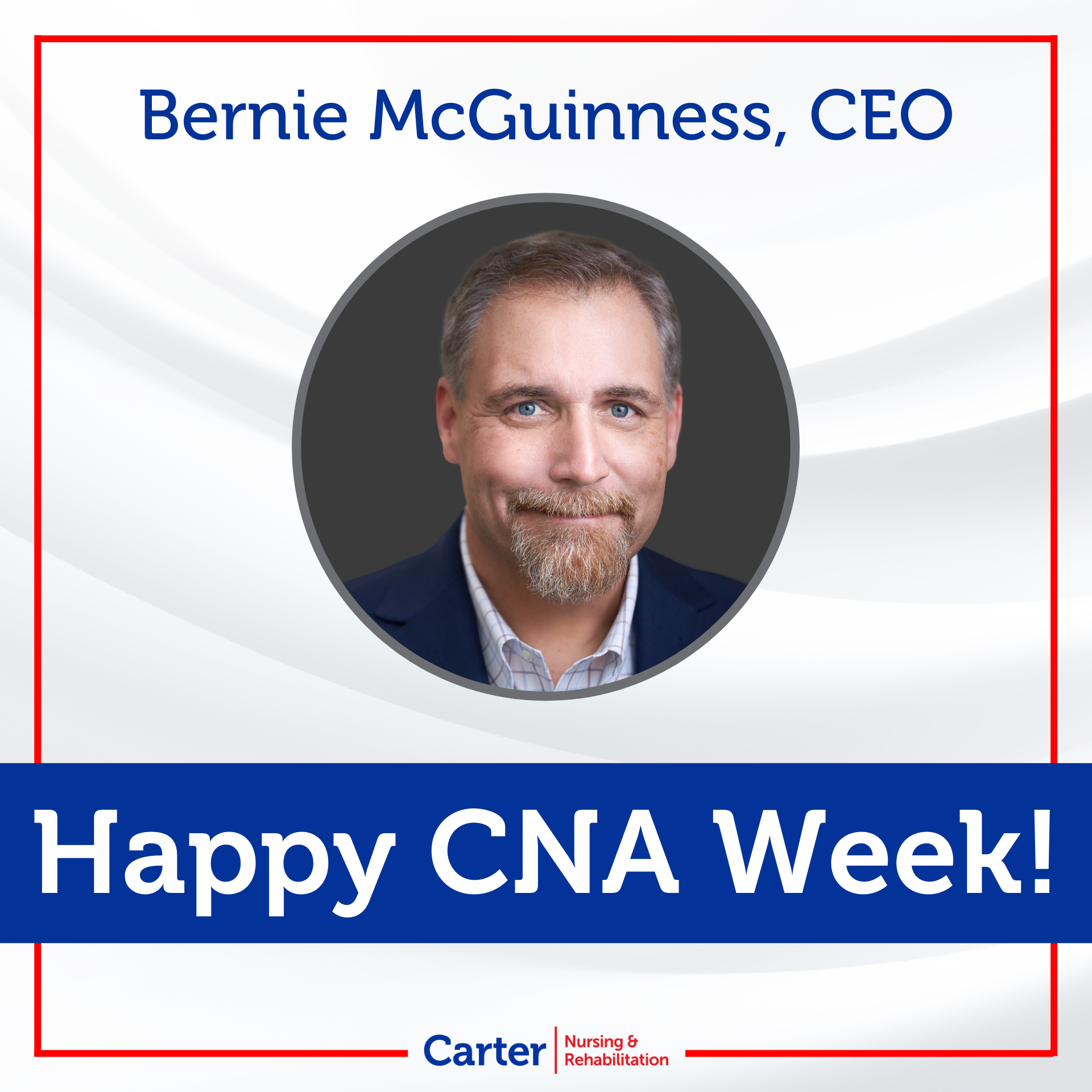
From the Desk of the CEO: Celebrating National Nursing Assistants Week

June 21, 2022

“I entered skilled nursing as a Certified Nursing Assistant (CNA). During this role, I developed love and compassion for the elderly. It gave me an opportunity to learn who each of these people were, hear their stories, and listen to the words of wisdom they often imparted to me. They encouraged me to continue to grow and make a difference in long-term care. As I continued in my healthcare journey, there were various leaders who believed in me and continued to provide opportunities and experiences. I continued to grow from one role to the next all while expanding my education of the field. I am thankful for each role that I’ve held through the years. Each member of the nursing team is important and needed, but the role of a CNA is invaluable. They are the backbone of the long-term care industry. They are often the unsung heroes that become more like family to a Resident than a caregiver. We honor and give gratitude to those CNA’s that answer the call every single day and make unmeasurable impact.”

CEO, Bernie McGuinness

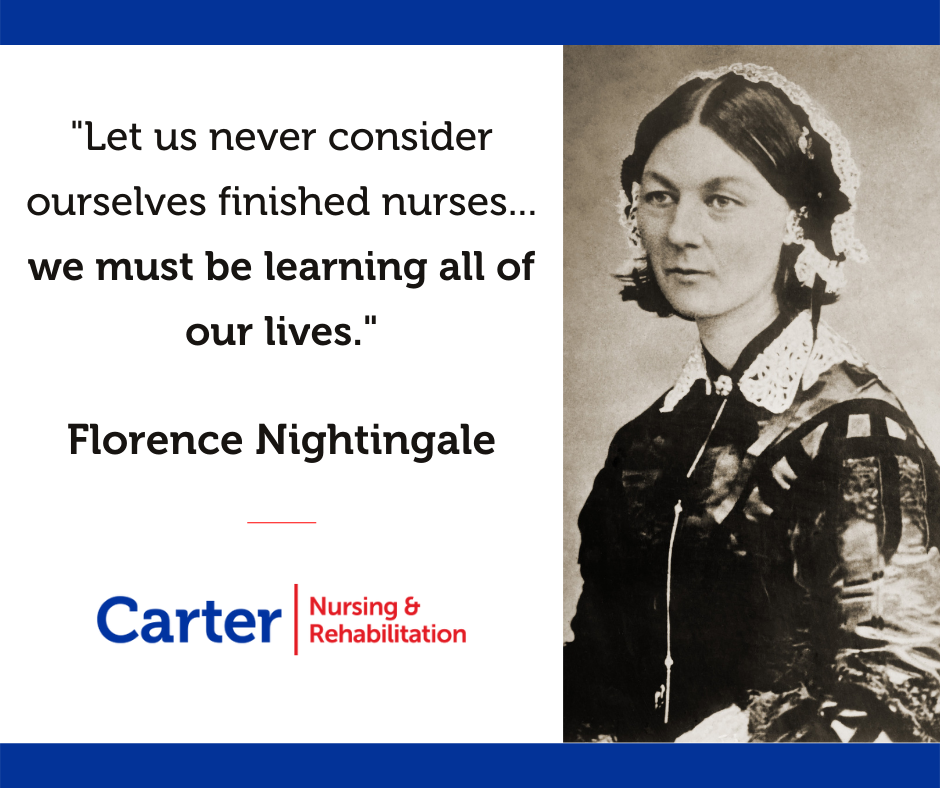
National Nurses Week: The History of Florence Nightingale

May 12, 2022

During National Nurses Week, take time to celebrate the founder of modern nursing, Florence Nightingale! Her endeavors to improve the aspect of healthcare has greatly shaped the quality of care by nurses in the 19th and 20th centuries. 

Currently, there are nurses all around the world putting their lives on the line to help stop the spread of COVID-19. It’s clear that Florence Nightingale’s impact on healthcare also helped pave the way for modern-day nurses and healthcare professionals to follow suit.

“With nurses around the world on the front lines of a global pandemic, it’s a poignant time to reflect on how Nightingale’s legacy laid the groundwork for their heroic work in hospitals today.” Says Greta Westwood, CEO of the Florence Nightingale Foundation. “She never took no for an answer – anything was possible.”

Also known as “The Lady with the Lamp”, Florence Nightingale started her nursing career in London, and later became appointed as the head nurse of the 1854 Crimean War. Nightingale’s passion and determination set her apart from others and got her the famous nickname “Lady with the Lamp” for checking on her patients via lamplight during the war. Not only did she care for her patients’ health, but she also often wrote letters to soldiers’ loved ones on their behalf.

The “Angel of the Crimea” made it her goal to lower death rates by improving hygiene practices in hospitals. She created numerous patient services that improved each patient’s quality of care while admitted in the hospital. She oversaw “invalid’s kitchen” where she set out food plans for patients that had dietary requirements. She also secured a laundry area so patients could have clean bed sheets and towels.

After the Crimean War, Nightingale wrote a book called Matters Affecting the Health, Efficiency and Hospital Administration of the British Army to share her observations and experiences while tending wounded soldiers. In 1857, the War Office’s administrative department was completely reconstruction due to Nightingale’s book and her experiences during the Crimean War, reforming several military hospitals that were under very poor conditions. (History.com Editors 2009)

In August of 1910, Nightingale became ill and was battling with heart failure. She died a week later at her home in London, bringing her life to an end at 90 years old. (History.com Editors 2009) Two years after her death, the Florence Nightingale Medal was created by the International Committee of the Red Cross, dedicated to be given to exceptional nurses every 2 years. In 1965, International Nurses Day was also created, residing on Nightingale’s birthday to continue celebrating her accomplishments. (Alexander 2018)

Despite her unexpected death, her legacy continues to live on at the Florence Nightingale Museum, which is located at the exact same spot of the original Nightingale Training School for Nurses. The museum holds over 2,000 artifacts to memorialize the mother of modern nursing. (History.com Editors 2009)

Florence Nightingale’s legacy is important to note during significant time for nurses courageously fighting on the frontlines during the pandemic. Notes Westwood, “Florence would be so proud of what nurses have managed to achieve during the pandemic.” (Haynes 2020)

References:

https://time.com/5835150/florence-nightingale-legacy-nurses/

http://history.com/topics/womens-history/florence-nightingale-1https://www.womenshistory.org/education-resources/biographies/florence-nightingale

National Nurses Week 2022: Month Long Discounts and Freebies

May 10, 2022


We are preparing for an amazing celebration of National Nurses Week this year! Many companies are showing their gratitude for nurses and healthcare workers by offering awesome deals and freebies during Nurses Week and throughout the year. Whether you are a healthcare worker looking for a good deal or you’re shopping for a healthcare hero in your life, check out these great deals valid for the entire month of May for Nurses Week 2022!

Food & Drinks

  • Mrs. Fields – Take a look online at this sweet selection of cookies in the Heroes Collection of cookie tins, which honors healthcare workers.
  • Outback Steakhouse – Grab a hot meal and a big thank you! Show your industry identification to get 10% off your bill. The discount is not available via ordering online.
  • Texas de Brazil – Enjoy a night or lunch out with a delicious selection of steaks (salads too!) and save 15% with a valid badge or ID.

Retail

  • Amazon – Curl up with a selection of four free medical drama books, specially curated to celebrate nurses.
  • Adidas – Receive 30% off in-store and on the Adidas website, and 20% off at factory outlet stores, when you verify your status as a nurse with ID.me.
  • All Seasons Uniforms – Spruce up your closet with 20% off all medical apparel, such as scrubs, lab coats, and cleanroom clothing. Use discount code NURSE20.
  • ASICS – Medical professionals and first responders, including nurses, physicians, police officers, and firefighters, can enjoy 40% off ASICS products. When you verify your healthcare worker status using SheerID, you will receive a on-time-use promo code.
  • Brooklyn Bedding – Don’t snooze on this offer. Get 25% off and free shipping on your entire order of mattresses, pillows, sheets, and/or foundations. Verify your eligibility via ID.me during checkout.
  • Lenovo – Need to upgrade your technology? Take an extra 5% off products sitewide, excluding doorbuster deals and select clearance products. Verify your healthcare worker status with ID.me during checkout.
  • L.L. Bean – Enjoy 15% off one purchase after verifying your employment status through SheerID. This discount is valid on merchandise purchases are llbean.com, retail stores, or by phone.
  • Lululemon – Receive 15% off in-store or online purchases.
  • Nike – All medical professionals and first responders in the US are eligible for a 10% discount. Verify your profession as a nurse with SheerID to get a one-time-use promo code.
  • Purple – Take 10% off any order purchased at purple.com or Purple retail showrooms, after verifying employment status through SheerID. Click on the “Verify Eligibility” button to start the process. Once approved, you will receive a single-use promotional code to use at checkout.
  • Ring – Stay safe with a 20% discount savings on select Ring Doorbell products.
  • Rothy’s – Enjoy some cool comfort with 20% off a pair of washable shoes. Verify your nurse status and claim the savings at online checkout.
  • Under Armour – Take advantage of 20% off at UA.com and in UA Brand House stores. Choose the Military and First Responder Discount at checkout, and then verify your status as a nurse with ID.me.
  • Verizon – You and your loved ones can get a Start Unlimited plan (with unlimited talk, text, and data) from $30 per line with four lines. That’s an offer the whole family can enjoy!
  • Vineyard Vines – Save 15% on all apparel with a verified medical ID.

Travel

  • Budget – Available through the ID.me shop, Budget is offering a discount of up to 25% for nurses. Create an ID.me account or sign in to enjoy this offer.
  • Enterprise Rent-a-Car – Similar to the Budget discount, nurses, military members, and teachers can take up to 25% off their rental car costs with Enterprise. An ID.me account is required to access this discount.
  • National – Rounding out the trio of rental car companies’ offers for nurses through ID.me, National “lets you choose any car in the aisle and go” with up to 25% off.

In addition to this month’s discounts and freebies, Majestic Care is proud to partner with Panda Perks to give our Care Team members 24/7 access to discounts and perks on the brands you love! Give us a call to learn more.

Success Story: Carolyn Bailey

March 22, 2022

Carter Nursing & Rehabilitation is thrilled to share resident Carolyn Bailey’s Success Story!

Ms. Bailey came to Carter Nursing & Rehab following a hospitalization that left her weak, unable to walk, and requiring assistance with all of her daily self care. Before she was admitted, she lived alone and was unable to care for herself. After spending 3 weeks in rehab, she was thrilled to return home independently. “My time at Carter Nursing & Rehabilitation was a great experience and I am looking forward to returning to ‘normal life’!” Congratulations to Mrs. Bailey and her Care Team on their success! We are very proud of her and we wish her the best of luck.

Success Story: Chad Fraley

October 28, 2021

Carter Nursing & Rehabilitation is proud to recognize Chad Fraley’s Success Story.

Chad is young man who came to Carter Nursing in September following a hospitalization and illness that left him unable to walk, speak, or participate in any of his basic activities of daily living. He began physical, occupational, and speech therapy services to regain his ability to function at home with assistance from his mother. Chad is now able to walk throughout the facility with supervision of our therapy team. He is also now able to hold conversations and complete his daily routine and activities with minimal assistance. Chad hopes to return home as soon as possible. Thank you, Chad, and your family for trusting Carter Nursing & Rehab with your recovery!

Success Story: Joel Greer

September 29, 2021

Carter Nursing & Rehabilitation is pleased to recognize Joel Greer’s Success Story.

Mr. Greer was admitted at the end of August, following a hospitalization that left him extremely weak and unable to complete his daily routine. At the time of admission, he was unable to ambulate. He required extensive assistance with transfers, bed mobility, dressing, bathing, and all daily care. He participated in physical and occupational therapy services daily, where he began to regain his strength, endurance, balance and coordination.

Through hard work and determination, he is now able to walk approximately 250 feet with a rolling walker! He requires supervision only with his bed mobility and transfers. He is able to bathe and dress himself, and is currently planning on returning home within a few days with the supervision of his wife. We are grateful for the opportunity to work with him and provide assistance and care in his time of need.

Success Story: Donald Carroll

August 12, 2021

Introducing one of Carter’s amazing residents, Donald (Donny) Carroll!

Donny was admitted to Carter in June 2021 following a hospitalization that resulted in extreme weakness, an increased risk for falling, and a greater need for physical assistance with self-care and mobility completion. He was living alone prior to his hospitalization, requiring only occasional assistance with Independent Activity of Daily Living. He is now able to stand up and walk on his own. Following several weeks of Rehab intervention here at Carter Nursing, Mr. Carroll is transitioning back home with his family. 

Everyone in his community loves him. He is such a sweet person. Thank you, Donny, for choosing Carter to help with your journey to recovery. We will miss you!

COVID-19 Viral Testing Tool

July 16, 2021

The COVID-19 Viral Testing Tool is an interactive web tool designed to help both healthcare providers and individuals understand COVID-19 testing options. This tool helps healthcare providers quickly access the most relevant, actionable information to determine what type(s) of COVID-19 testing they should recommend to patients. The tool helps individuals determine what type of test they should seek. After test results are in, the tool can help interpret test results and guide next steps.  

The online, mobile-friendly tool asks a series of questions, and provides recommended actions and resources based on the user’s responses. To use the Viral Testing Tool, click here: Testing | CDC